-
World’s Largest Tinplate Plant: A Visit to ThyssenKrupp Rasselstein
8. Dezember 2025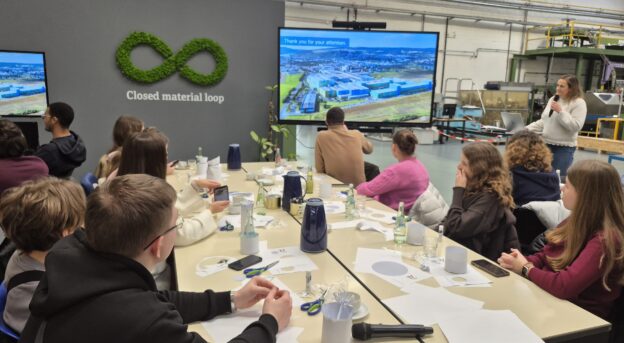
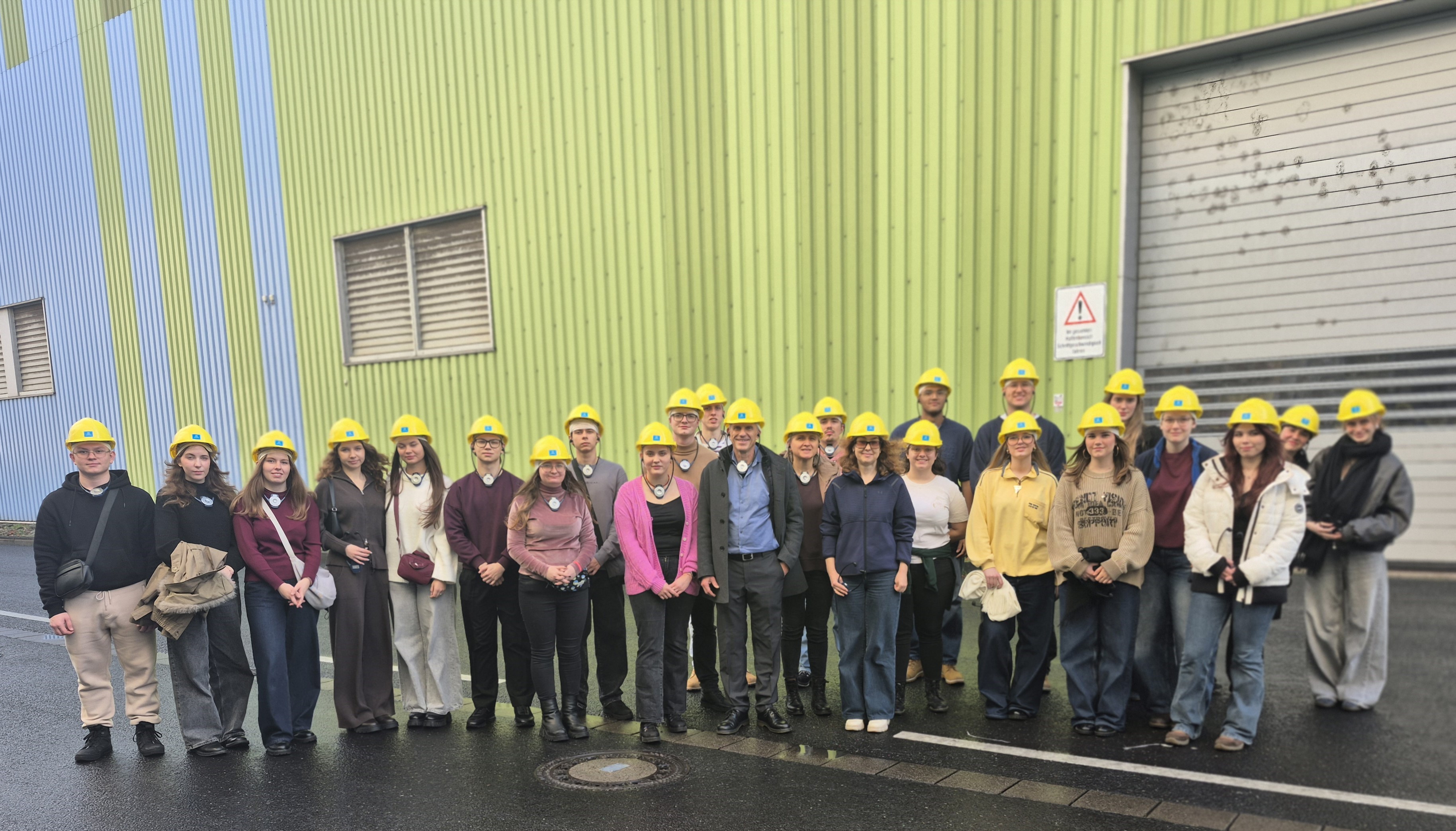
As part of the DAAD-funded PACK IT mobility program, which aims to connect academic education with industrial practice in the field of packaging, a series of visits to leading German industrial enterprises was organized. Within this framework, students took part in an educational excursion to ThyssenKrupp Rasselstein, gaining insight into large-scale industrial metal production and its significance for modern packaging applications.
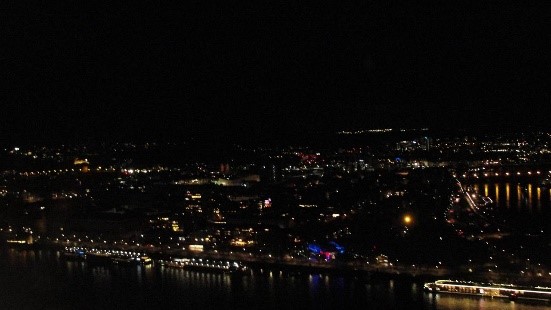
On December 8, 2025, the production facilities were visited to explore advanced manufacturing processes and material technologies. The excursion began with breakfast at a historic hostel located within the Ehrenbreitstein Fortress, where panoramic views of Koblenz created a motivating atmosphere and set a positive tone for the day’s industrial program.
The visit contributed to a deeper understanding of the role of metal materials in packaging systems and illustrated how industrial efficiency, sustainability strategies, and technological expertise are integrated in contemporary production environments.
Upon arrival at the plant, the visit introduced a company that has been shaping the metal packaging industry since 1760. Today, ThyssenKrupp Rasselstein produces approximately 1.5 million tons of tinplate annually and supplies customers worldwide across a wide range of industrial sectors. A detailed technical presentation provided insight into key production stages, including the varnishing and laminating of steel sheets. Particular attention was drawn to the precision and efficiency of modern processes, such as coating technologies that allow layers to dry within just ten minutes at temperatures of around 210 °C. Highly automated systems and heavy-duty logistics solutions ensure the safe and continuous handling of massive steel coils throughout the facility.
A particularly significant aspect of the visit was the focus on sustainability and circular economy principles. Tinplate is almost 100 % recyclable without any loss of material quality, making it an exemplary packaging material from an environmental perspective. A food can produced today can be recycled and transformed into a completely different product in the future, such as an automotive component. This material efficiency clearly demonstrates how industrial production can align with long-term environmental responsibility.
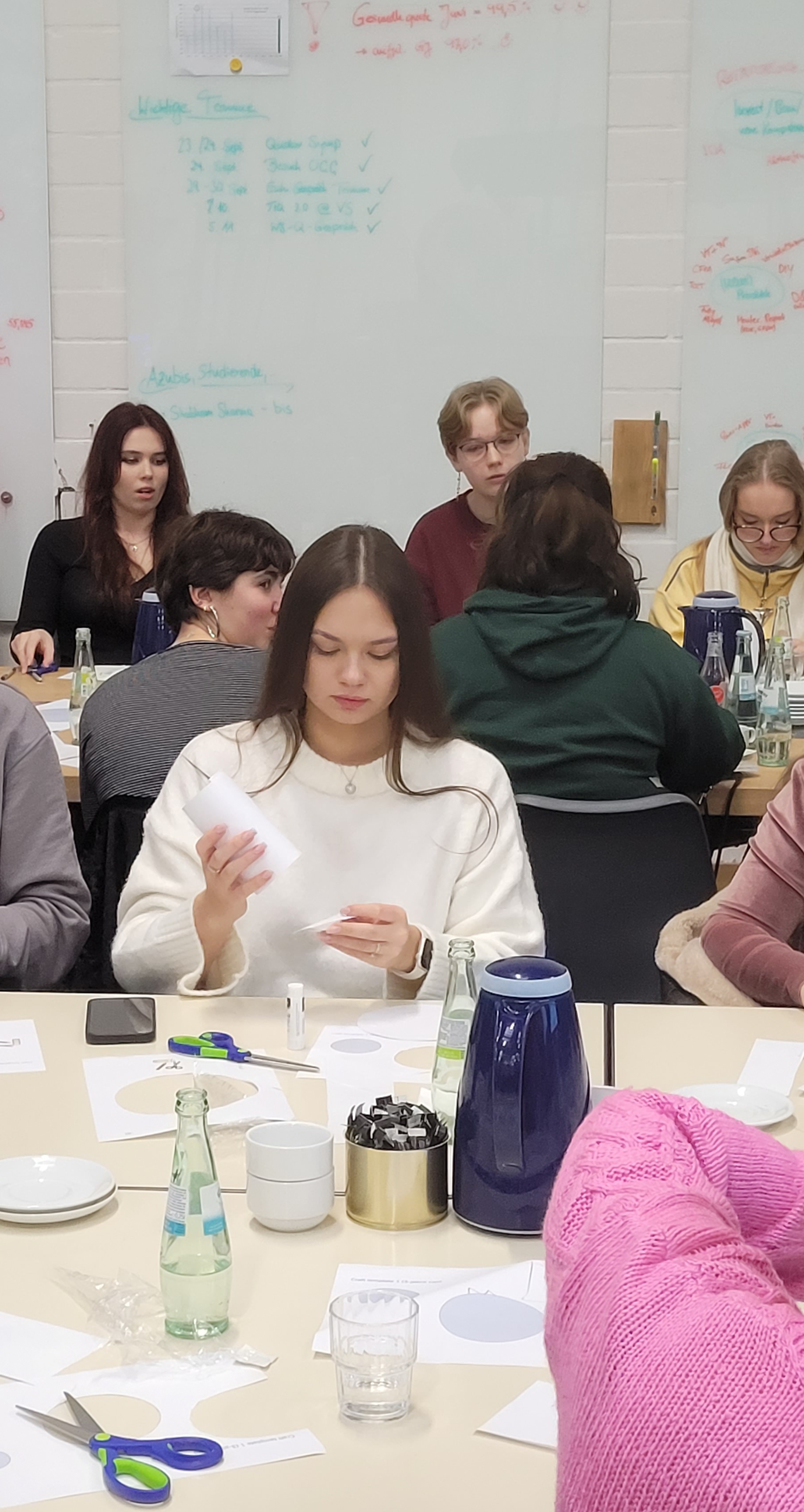
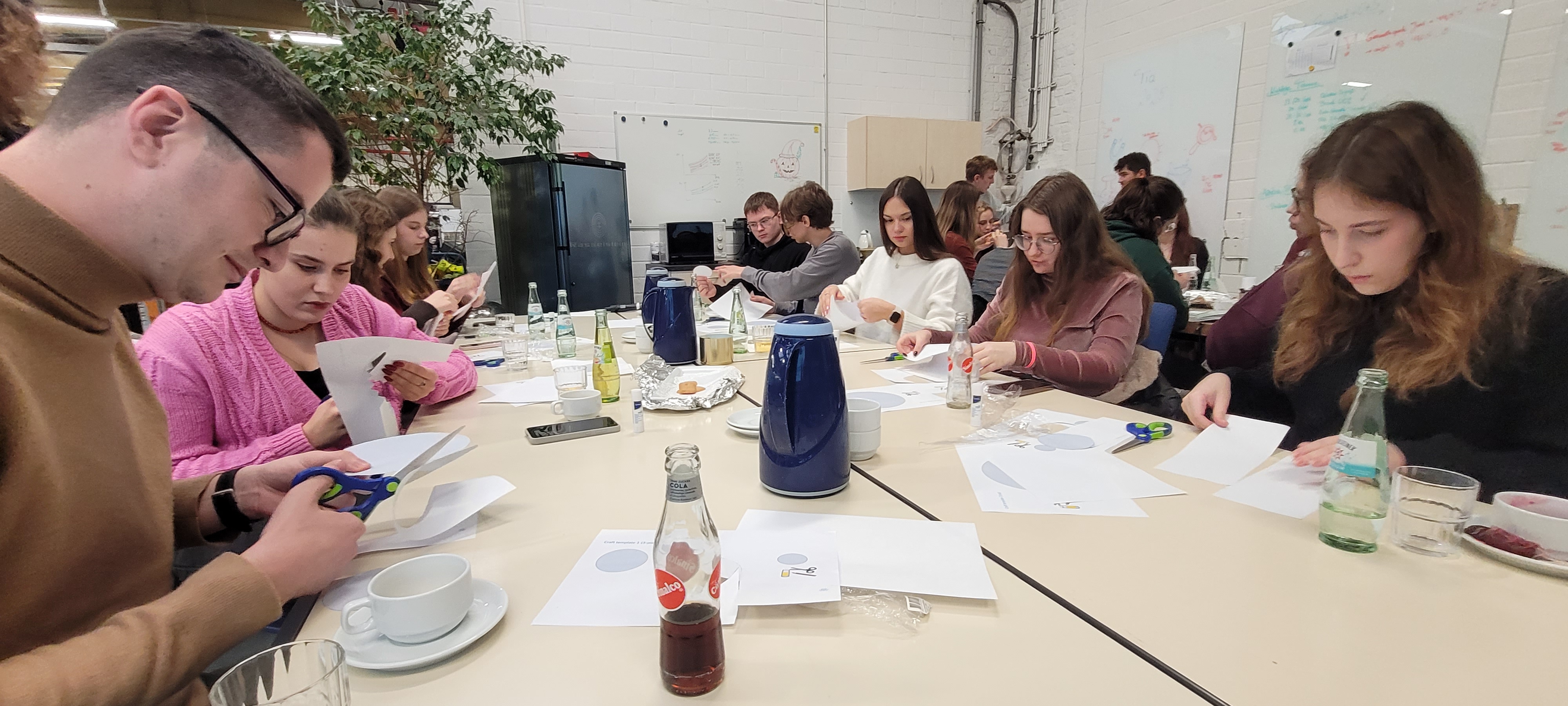
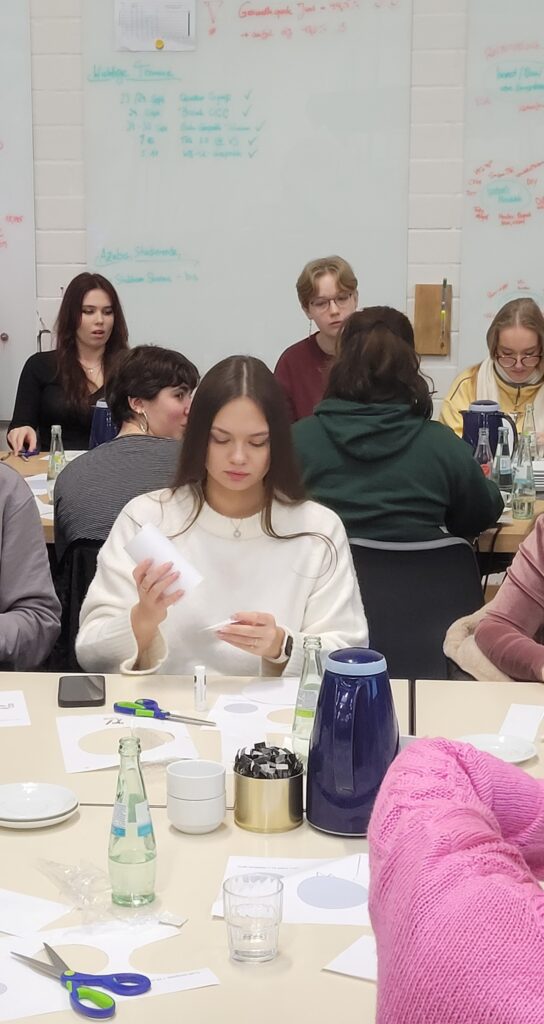
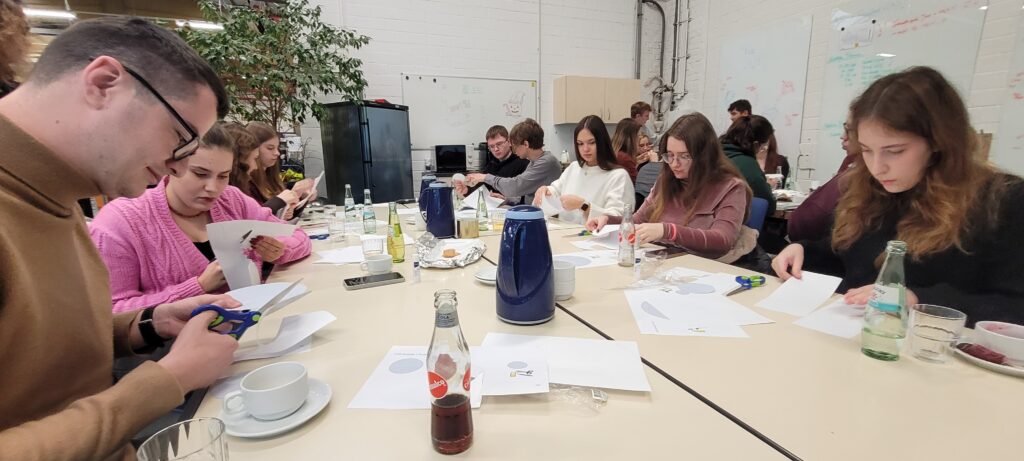
The educational component of the visit was further strengthened through interactive tasks. By constructing paper models of cans, participants were able to better understand the structural, material, and engineering challenges behind seemingly simple packaging solutions. This hands-on experience complemented the industrial tour and highlighted the complexity, creativity, and technical precision involved in everyday packaging design.
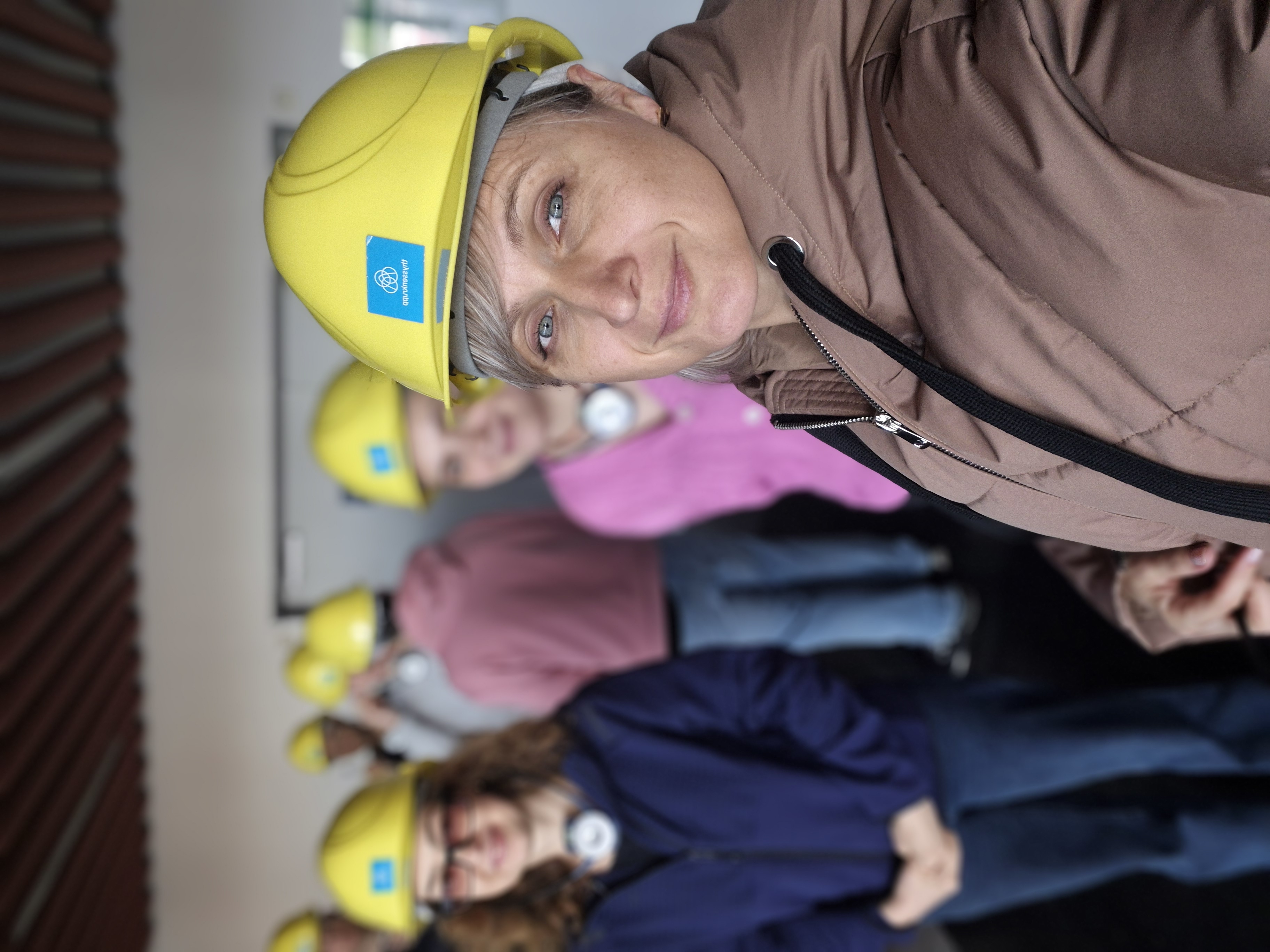
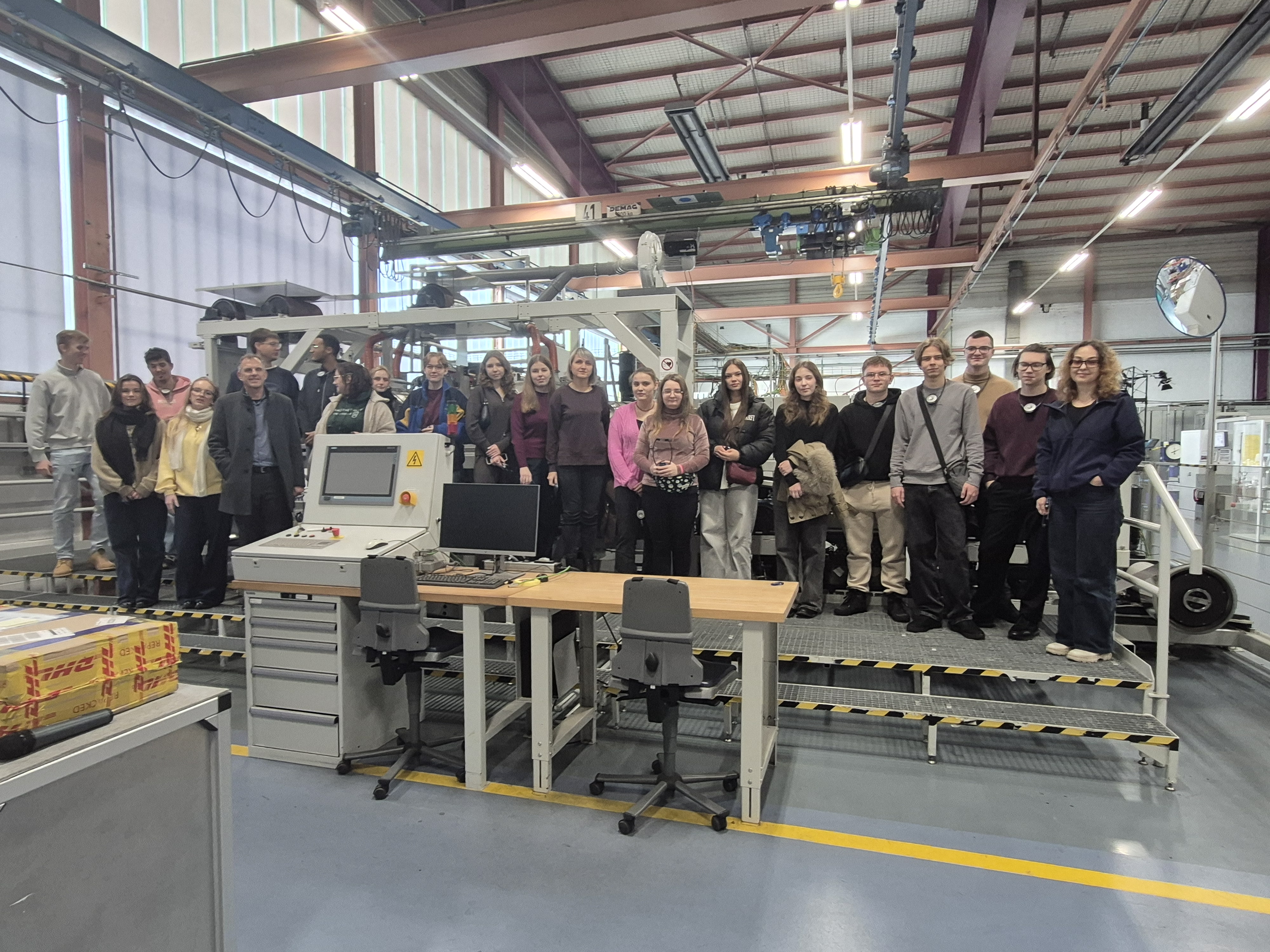
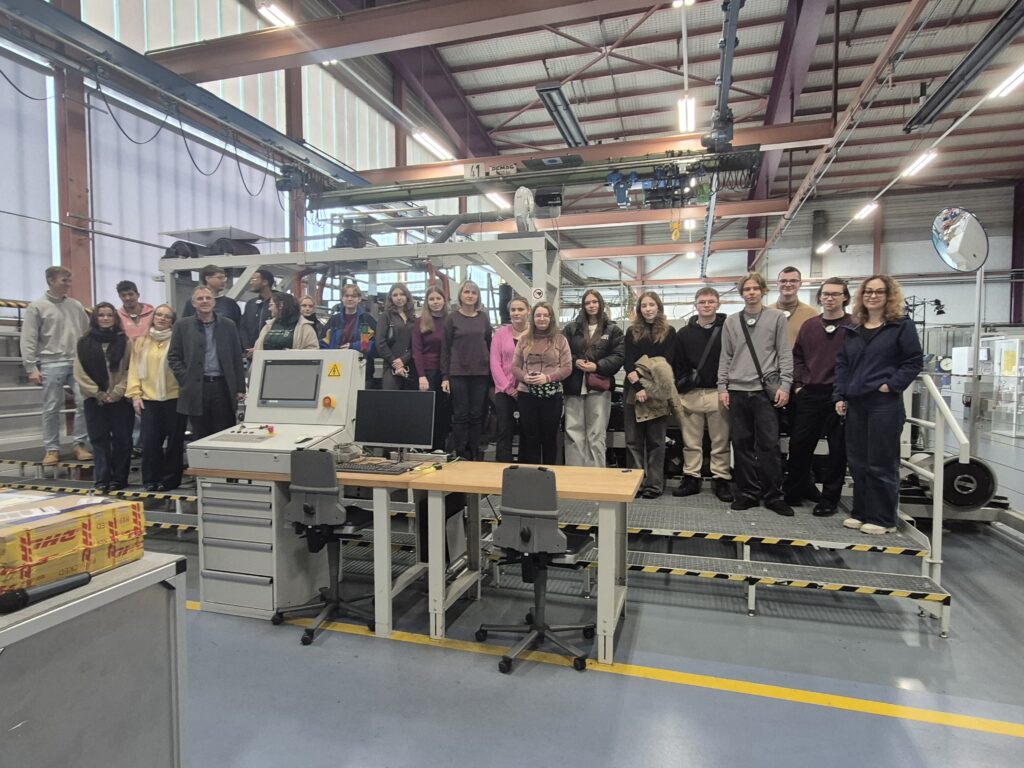
The highlight of the visit was the opportunity to access the production floor. Equipped with appropriate safety gear, participants walked through vast production halls and observed etching lines and coating units in active operation. The scale and coordination of the processes offered a vivid illustration of industrial precision and efficiency. A distinctive detail of the tour was the sight of the well-known “Zebra” and “Cow” forklifts, whose unique designs add a recognizable character to the industrial environment and reflect the company’s attention to workplace culture.
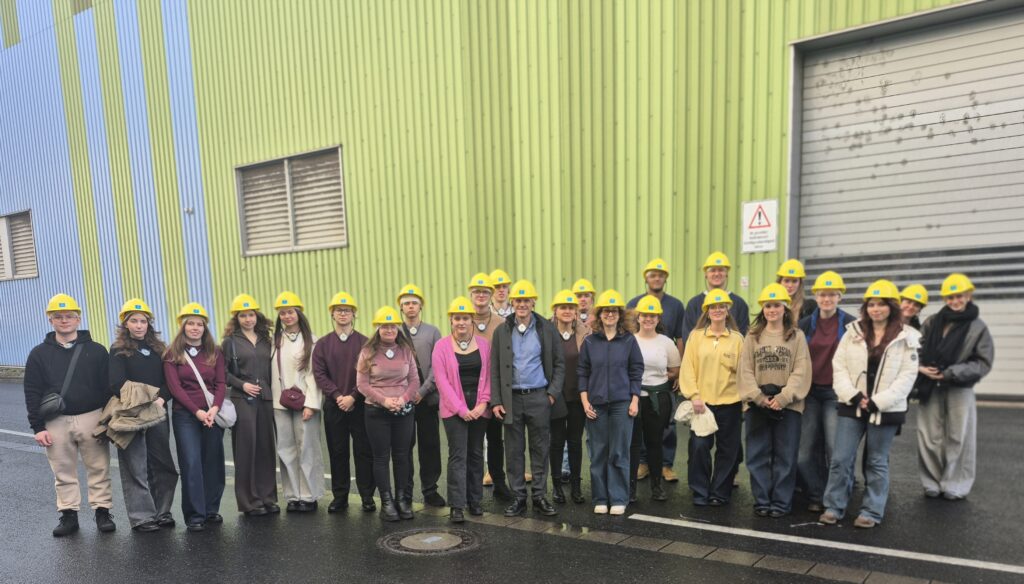
The program concluded with a lunch in the company’s historic canteen, providing an informal setting for professional exchange. Discussions with industry experts focused on career paths, current challenges in the packaging sector, and the skills required for future engineers and managers. This exchange added an important human and educational dimension to the technical visit.
Special appreciation is extended to Manuel Köhl and Vanessa Sonntag for their insightful presentation of the company’s operations, as well as to Prof. Stefan Junge and the ThyssenKrupp Rasselstein team for organizing and supporting this visit. The excursion offered a valuable behind-the-scenes perspective on a global industrial leader and served as a meaningful conclusion to an intensive learning experience within the PACK IT mobility program.
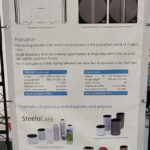
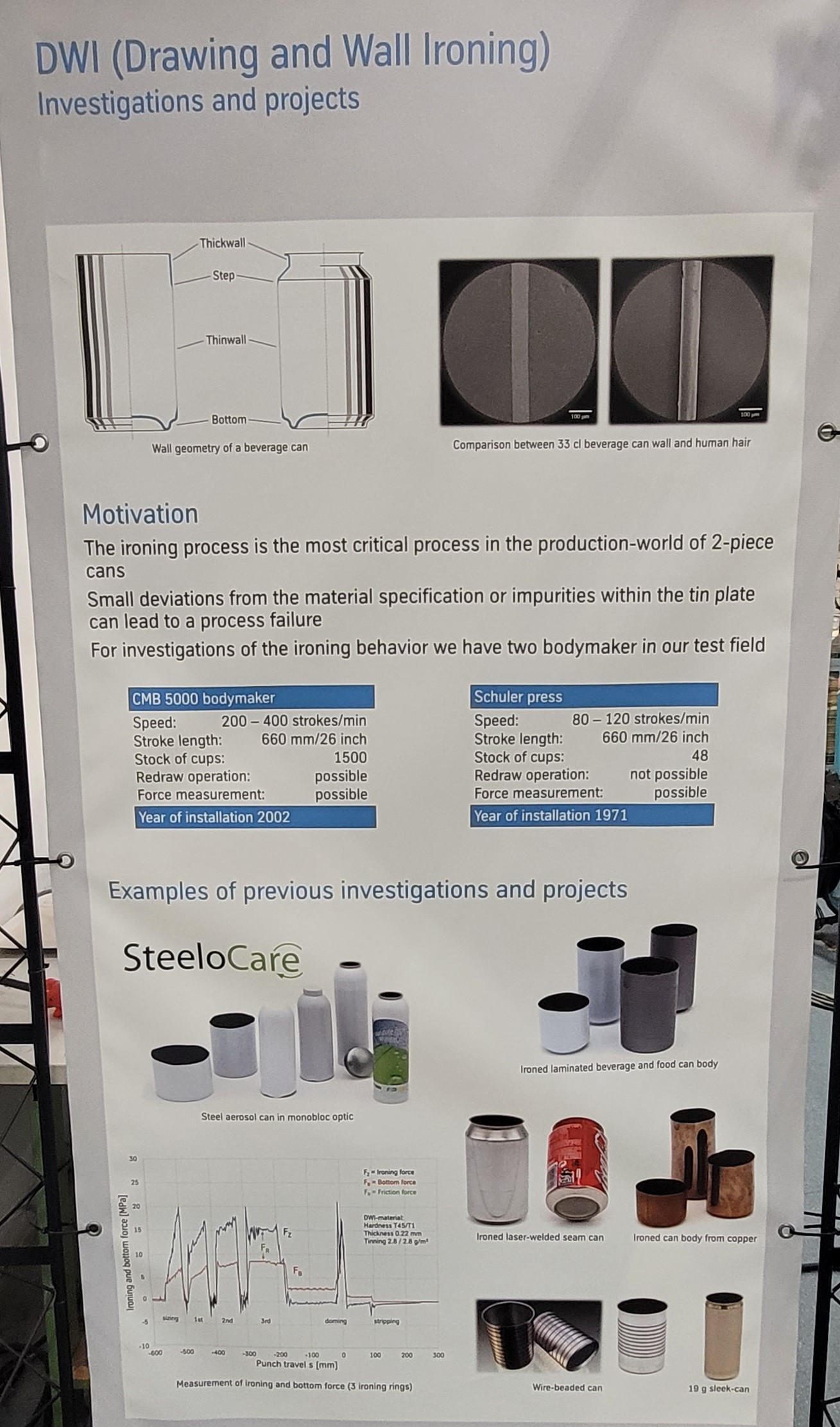
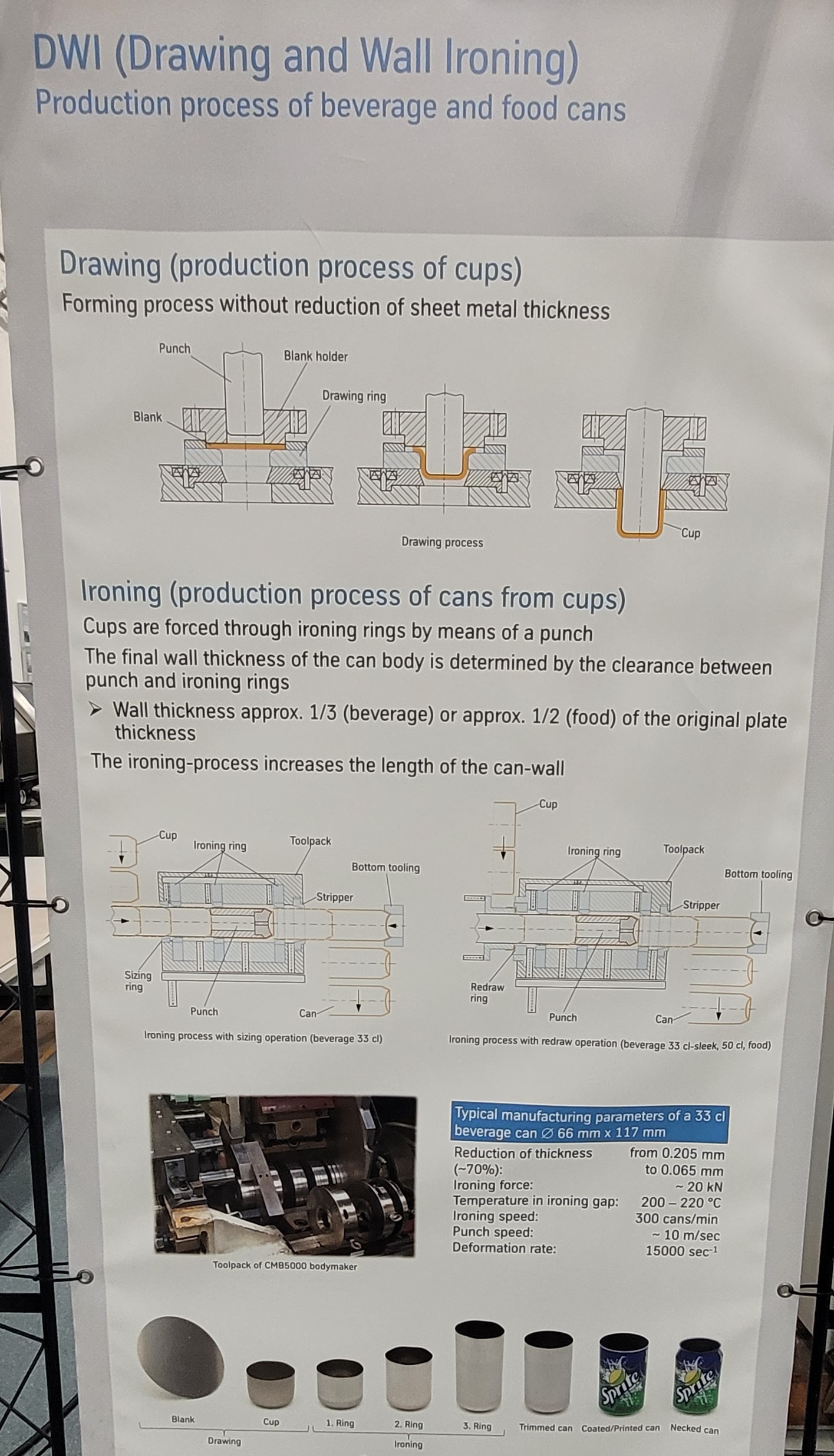
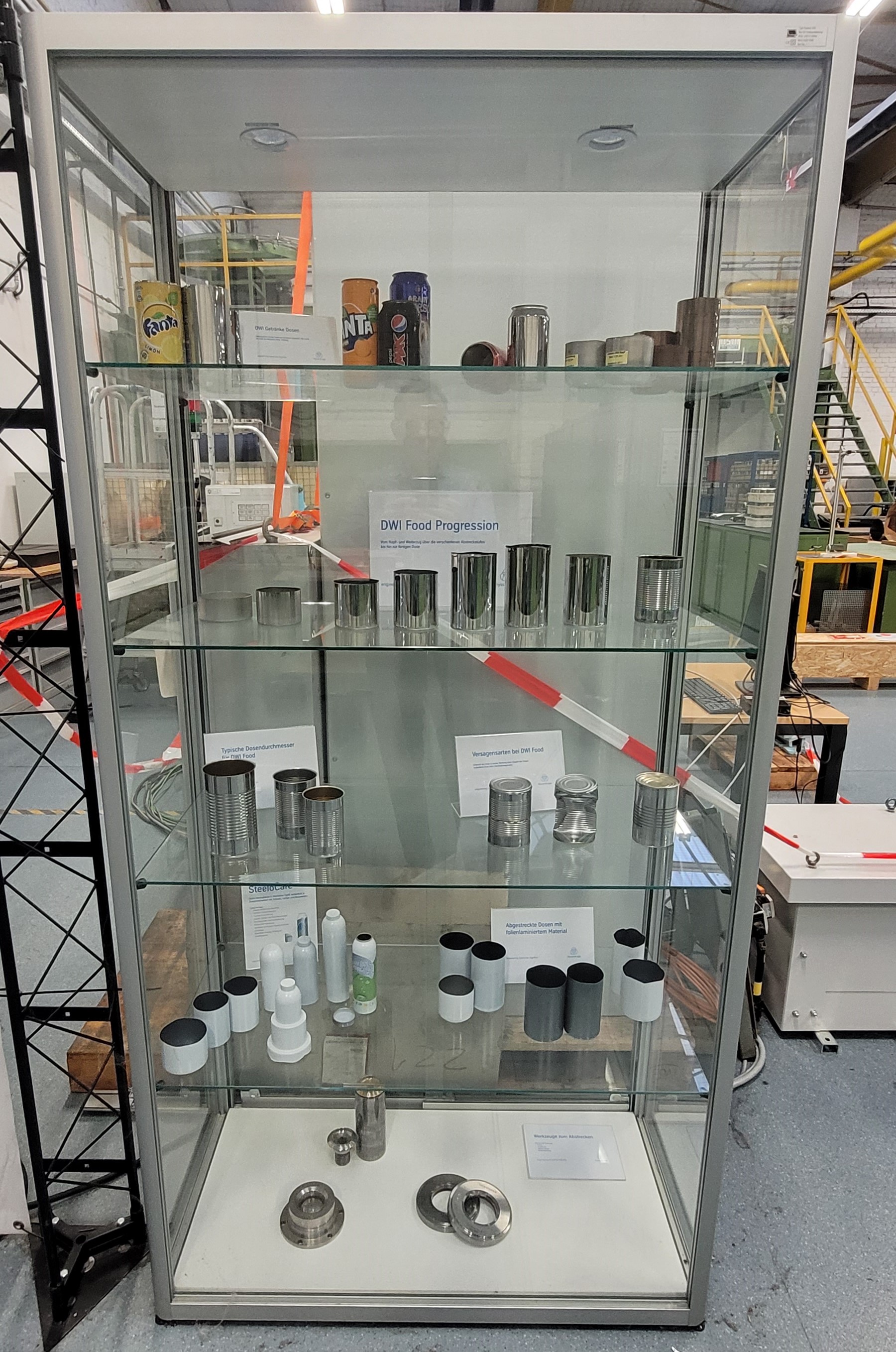
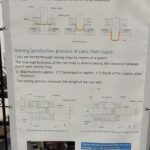
tin can production process

The view from youth hostel over city of Koblenz
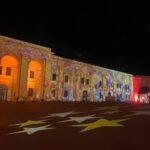
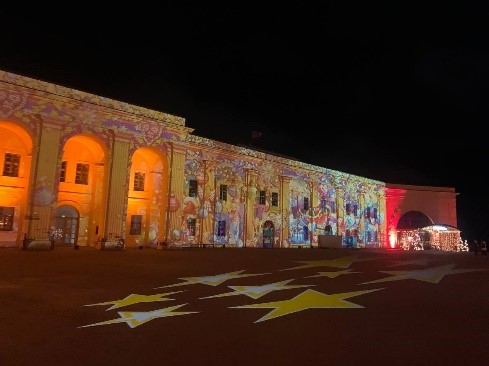
festival of lights
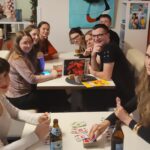
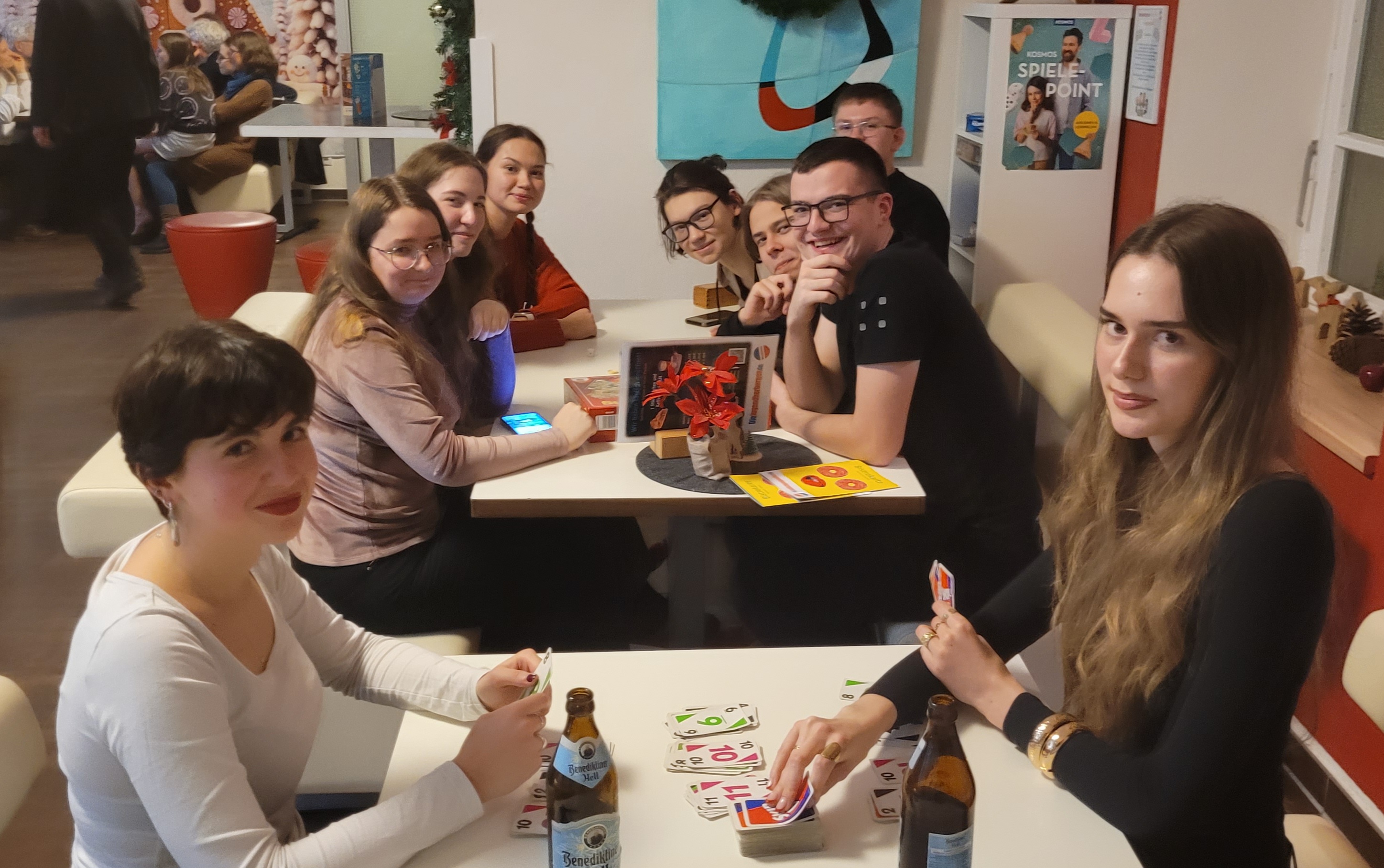
„gaming“ in youth hostel