-
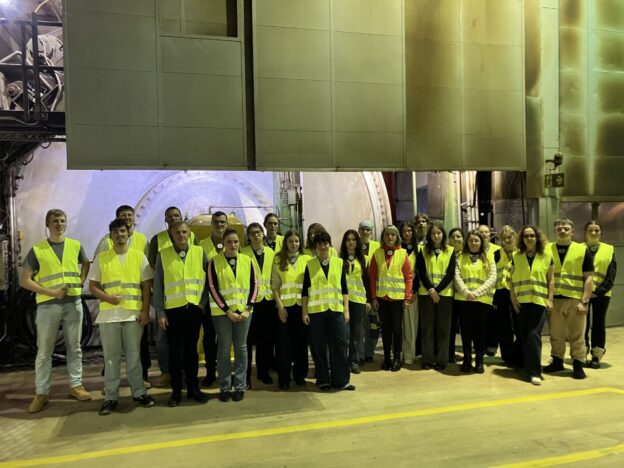
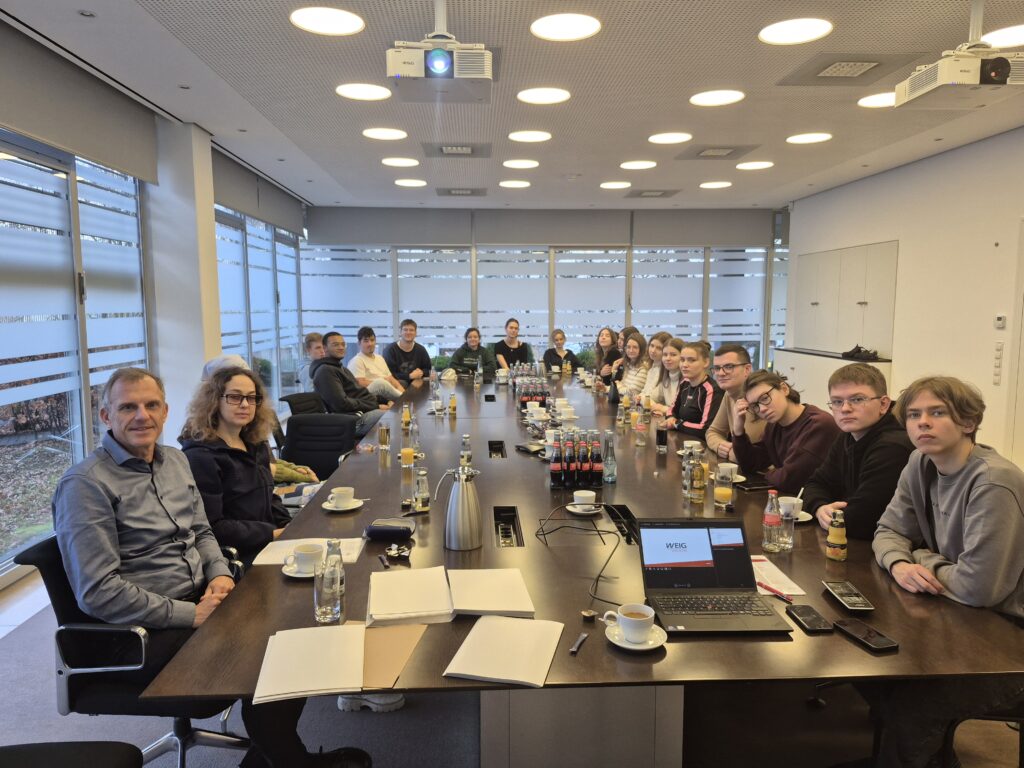
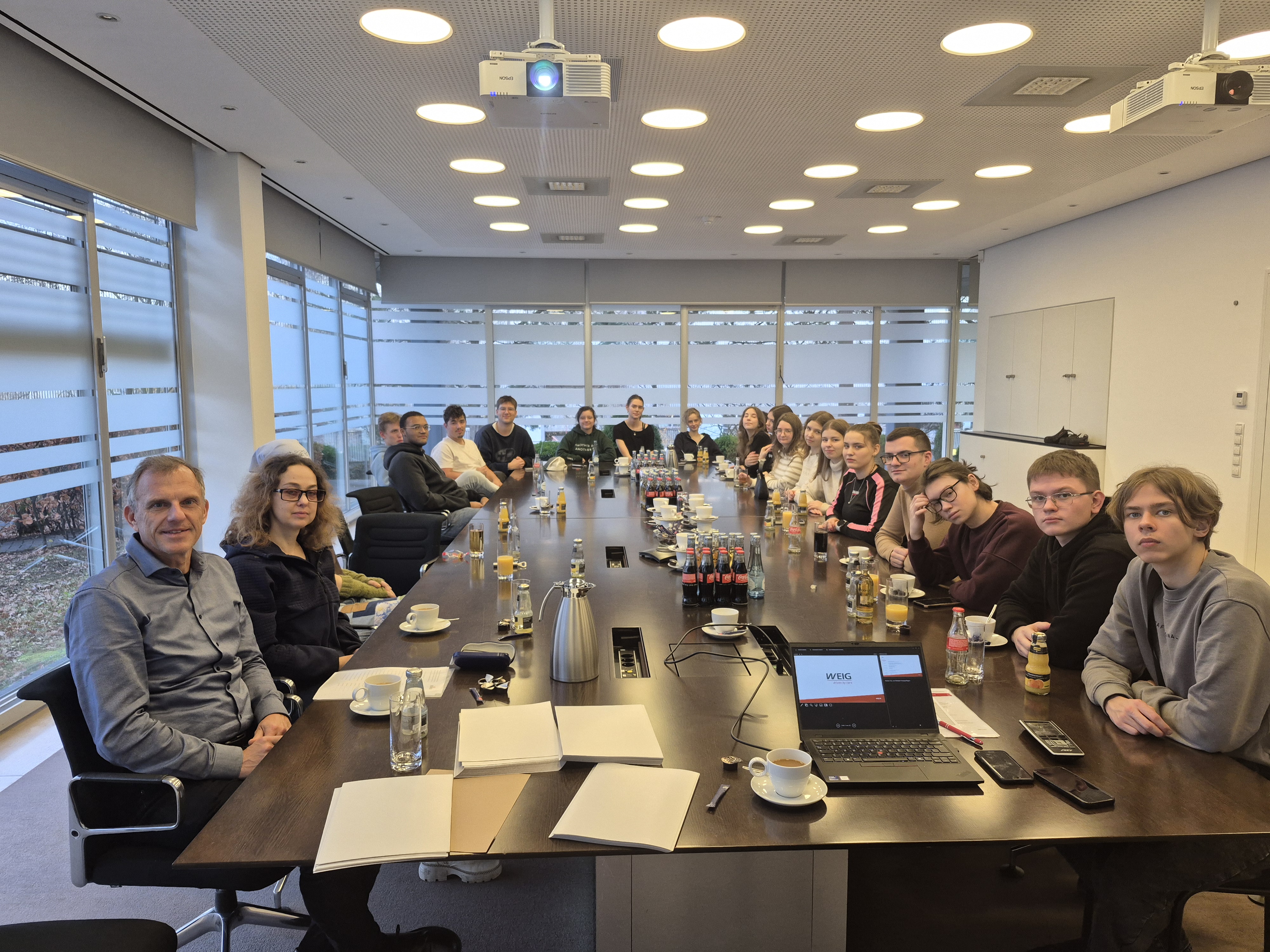
As part of the DAAD-funded PACK IT mobility program, which focuses on sustainable packaging and the integration of academic learning with industrial practice, a study visit was organized to a modern industrial facility specializing in the production of cardboard made from recycled materials. The WEIG company is among the leading manufacturers in Europe in the field of recycled cardboard and environmentally responsible packaging solutions. The primary objective of the visit was to familiarize students with real industrial operations, advanced recycling technologies, and contemporary approaches to sustainable manufacturing.
Company Overview
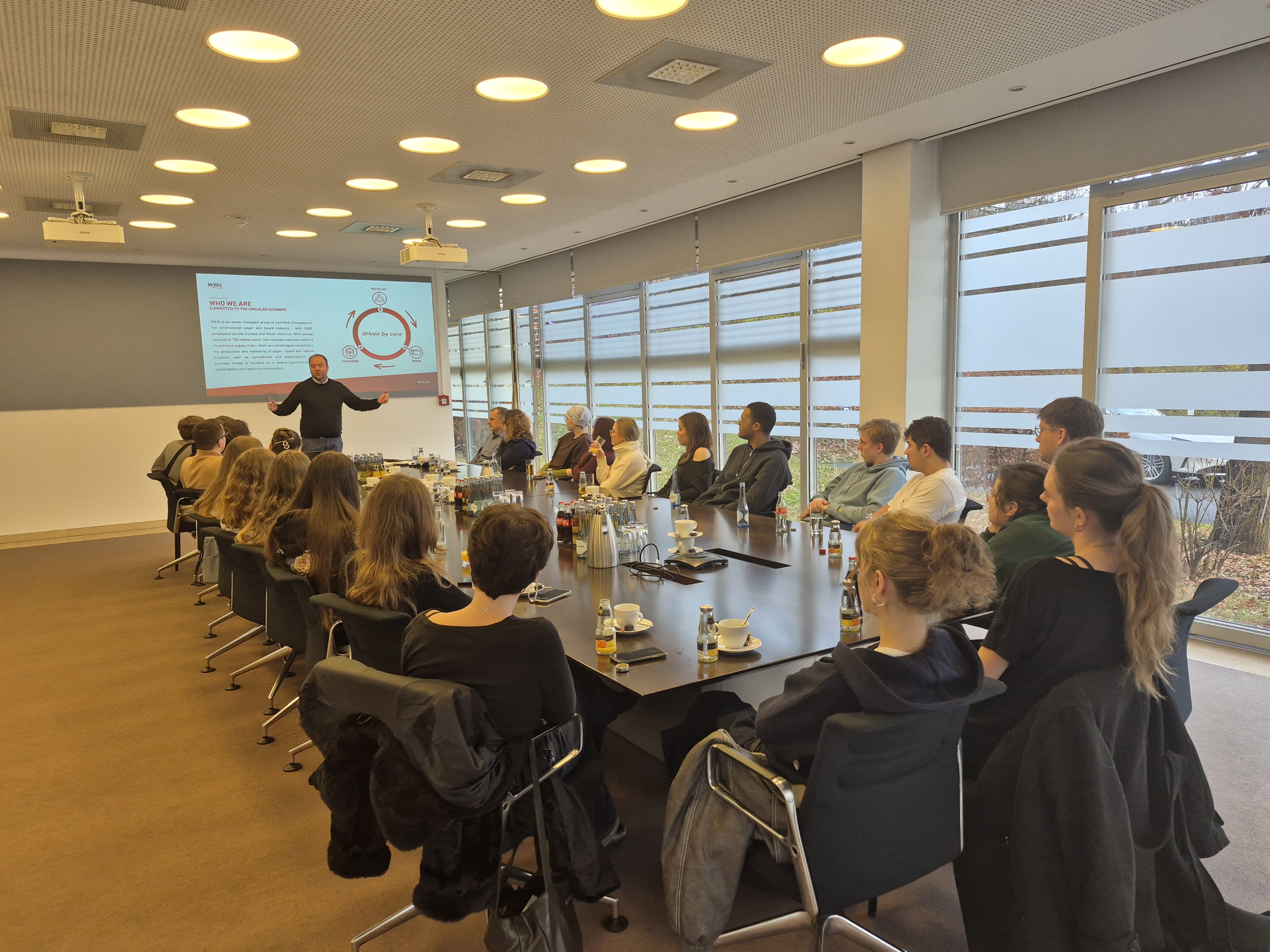
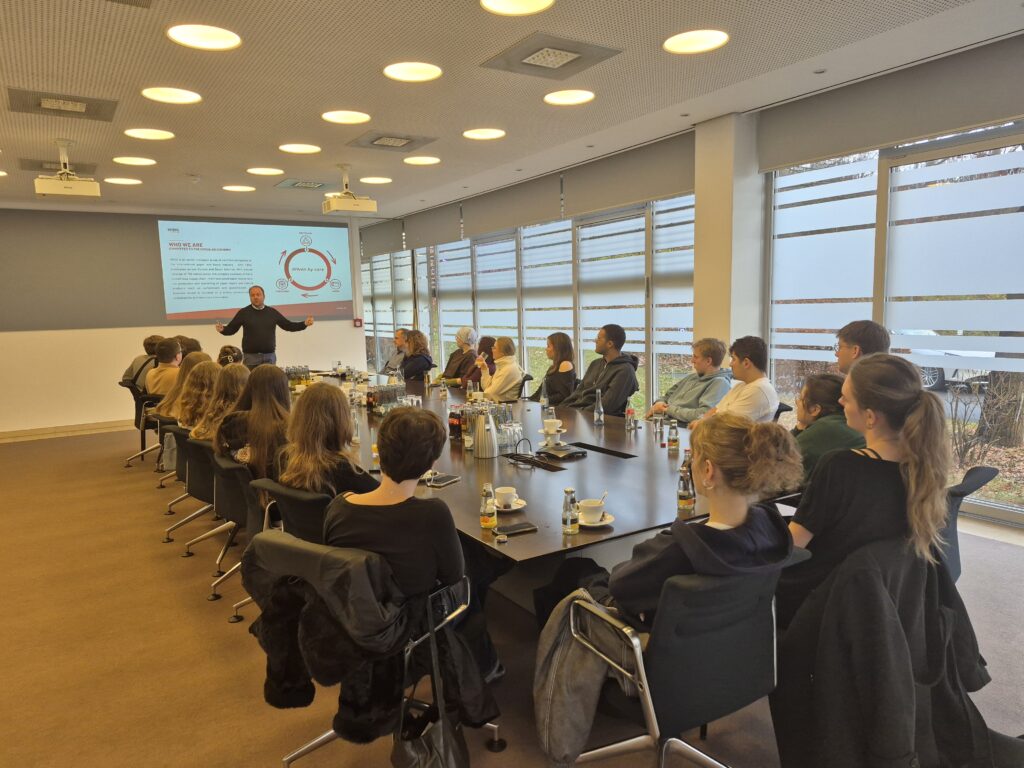
The visit began with an engaging introductory presentation delivered by company representatives. It provided a clear overview of the company’s history, key stages of development, and its significant role within the European recycling industry. Founded in Germany in 1931, the company has steadily expanded its production capacities over the decades, continuously adapting to evolving technological standards and growing environmental demands.
Particular emphasis was placed on the company’s mission, which is strongly oriented toward sustainable development, consistent product quality, and the efficient use of secondary raw materials. The presentation highlighted how long-term industrial experience is combined with modern recycling technologies to support circular economy principles and meet the challenges of today’s packaging industry.
Environmental Responsibility
Special attention was given to environmental protection and strict compliance with international quality and safety standards. The company actively implements energy-efficient technologies, closed-loop water recycling systems, and comprehensive waste reduction measures across its production processes. In addition, continuous monitoring and quality control systems ensure that environmental targets are met without compromising operational efficiency.
These practices significantly reduce the environmental footprint of production while maintaining stable output levels and consistently high product reliability. By integrating sustainability into everyday industrial operations, the company demonstrates how recycled cardboard manufacturing can successfully balance environmental responsibility with economic performance and technological efficiency.
Production Process
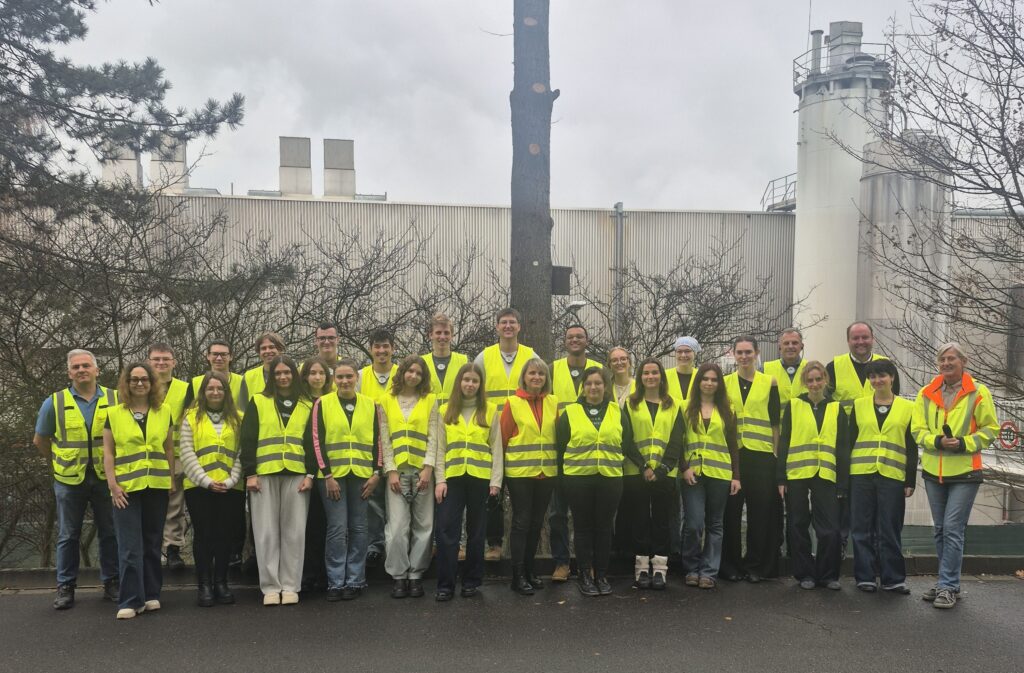
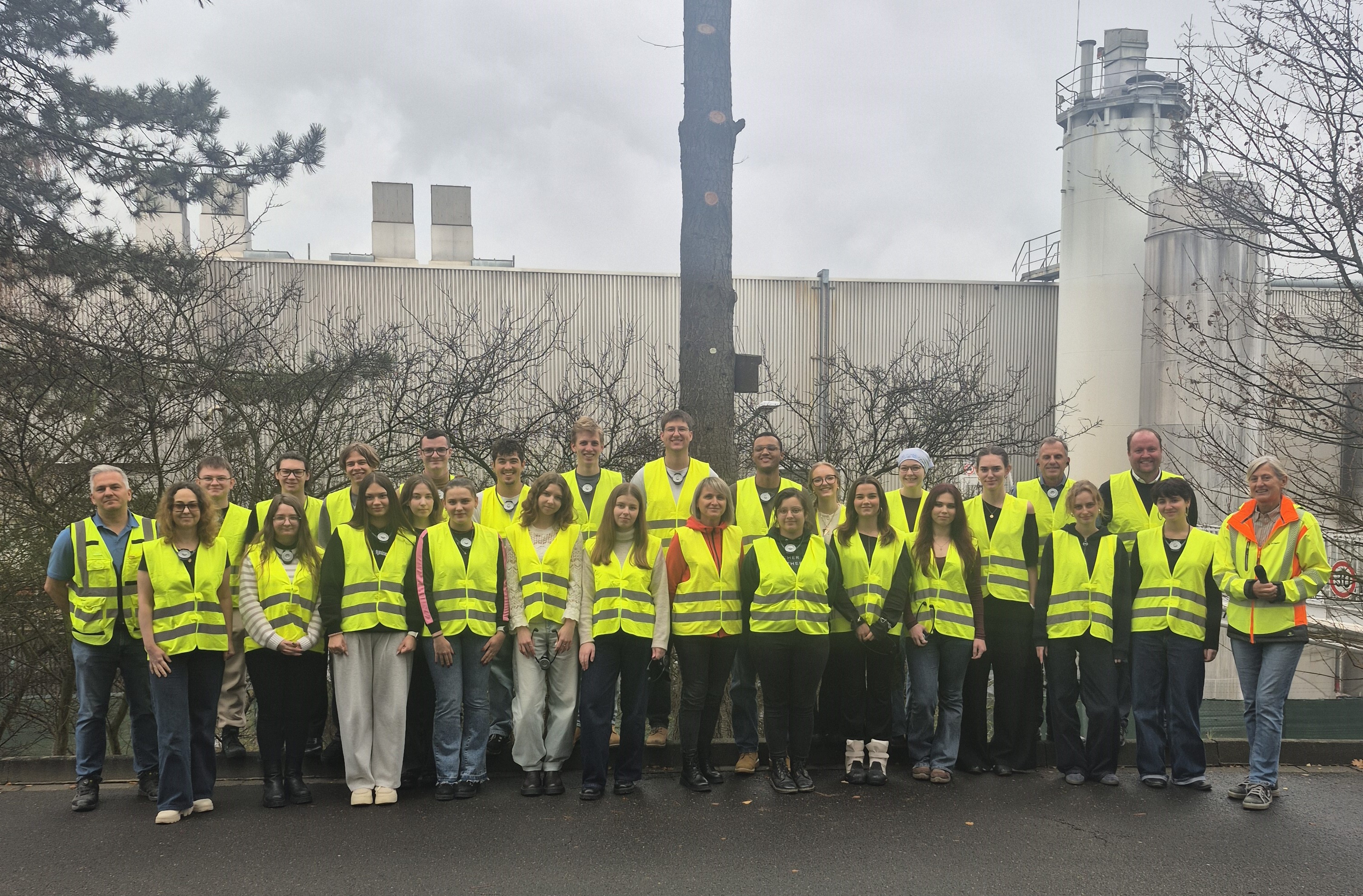
During the guided tour, the complete technological process of recycled cardboard production was presented. The process begins with the collection and delivery of waste paper from households, offices, and industrial facilities. Upon arrival at the plant, the raw material is carefully sorted according to type and quality to ensure consistent processing conditions.
The sorted waste paper is then fed into pulping units, where it is mixed with water and mechanically processed. At this stage, paper fibers are separated and transformed into a homogeneous pulp. The pulp subsequently passes through several cleaning and purification stages, during which impurities such as plastic, metal, sand, and printing inks are removed using screening, filtration, and flotation technologies.
Once cleaned, the pulp is supplied to the paper-making machine, where the cardboard sheet is formed. The pulp is evenly distributed onto continuously moving forming screens, creating a uniform sheet structure. This sheet passes through pressing sections that remove excess moisture and provide the required density, strength, and mechanical stability.
In the next stage, the cardboard enters the drying section, which consists of multiple heated cylinders. Controlled drying reduces the remaining moisture content to the desired level. Final finishing operations, including surface smoothing and, if required, special treatments, are then carried out. At the final stage, the finished cardboard is cut into sheets or wound into rolls. Quality control procedures are integrated throughout the entire production process to ensure compliance with technical, safety, and performance standards.
Conclusion
Overall, the study visit proved to be highly informative and educational. It provided a clear and practical understanding of modern recycling technologies and industrial recycled cardboard production processes. The visit highlighted the crucial role of recycling in environmental protection, resource efficiency, and the development of sustainable packaging solutions.
By observing real industrial operations and advanced technological systems, the visit reinforced the importance of integrating sustainability principles into modern manufacturing. The experience contributed to a deeper appreciation of recycled materials as a key component of the circular economy and emphasized the responsibility of future specialists to support environmentally conscious and innovative industrial practic